How often should you really change your engine oil? Every 5,000 km? 8,000 km? Or can you safely wait until 15,000 km?
The answer isn’t the same for everyone.
A driver making short daily trips around North Vancouver puts different demands on their engine than someone commuting long distances on the highway. Even two identical cars can have different maintenance needs depending on how they’re driven.
At Bruno Automotive, we believe oil changes should be based on your vehicle’s manufacturer recommendations, driving conditions, and service history—not simply a number on a sticker.
Here’s how your lifestyle can affect your oil change schedule.
How Often Should You Change Engine Oil?
Many modern vehicles have manufacturer-approved oil change intervals ranging from around 8,000 to 16,000 km, while some models require shorter intervals or use an oil-life monitoring system.
The important thing is to follow the schedule specified for your particular vehicle, including any recommendations for severe driving conditions.
As a general planning guide:
| Driving habits | Typical planning range |
|---|---|
| Frequent short city trips and stop-and-go traffic | 5,000–8,000 km or 6 months |
| Mixed city and highway driving | 8,000–12,000 km or 6–12 months |
| Mostly longer highway trips | 10,000–16,000 km or up to 12 months |
| Regular towing, heavy loads or demanding mountain driving | Consider the manufacturer's severe-service schedule |
| Low-mileage vehicle driven occasionally | Follow the time limit, even if mileage is low |
For example, Subaru Canada lists 10,000 km or six-month maintenance intervals for many models, while Toyota Canada’s current service guidance describes a 12-month or 16,000 km engine oil change for certain vehicles.
Your vehicle’s requirements should always come first.

1. Short Trips: Why City Driving Can Be Harder on Engine Oil
- Repeated cold starts
- Engine operation below normal temperature
- Stop-and-go traffic
- Extended idling
- Low annual mileage despite frequent engine use
Our recommendation:
If most of your trips are under 8 km, check whether your vehicle’s manufacturer specifies a shorter oil change interval for severe driving conditions. For vehicles where the manufacturer allows it, an interval around 5,000–8,000 km or six months may be a sensible preventive-maintenance target.2. Long Highway Commutes: Can You Go Longer Between Oil Changes?
Generally, steady highway driving is easier on engine oil than repeated short trips.
Once the engine reaches operating temperature, the oil can circulate consistently, moisture can evaporate more effectively, and the engine spends less time cycling between cold starts and warm-up conditions.
If you commute long distances along Highway 1 or regularly travel between North Vancouver and the Fraser Valley, your vehicle may qualify for its normal-service maintenance schedule.
With manufacturer-approved synthetic oil, some modern vehicles can safely travel 10,000–16,000 km between oil changes.
However, that doesn’t mean every vehicle should follow a 16,000 km interval.
Engine design, oil specifications, age, service history, and manufacturer guidance still matter.
3. Winter Driving and Mountain Trips: Do They Affect Oil Change Intervals?
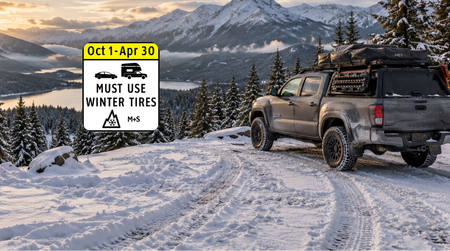
For North Vancouver drivers, weekend trips to Whistler, Cypress Mountain, or the BC Interior are part of everyday life.
But does driving through snow or up mountain highways mean you should change your oil more frequently?
Not necessarily.
An occasional trip to Whistler usually involves sustained highway driving, which allows the engine to reach normal operating temperature.
However, several conditions can increase the demands placed on engine oil:
- Frequent cold starts in freezing temperatures
- Extended idling while warming up or waiting in traffic
- Towing a trailer or carrying heavy loads
- Sustained high engine load on steep climbs
- Regular driving on demanding mountain or off-road routes
Driving uphill by itself doesn’t automatically require an early oil change. It’s the combination of engine load, temperature, frequency, and overall driving conditions that matters.
If you regularly tow, drive through mountain passes under heavy load, or operate in extreme cold, consult your vehicle’s severe-service maintenance schedule.
For occasional ski trips in an otherwise normally driven vehicle, an extra oil change is usually unnecessary unless your service is already due.
4. What If You Don't Drive Very Much?
Some drivers only use their vehicles on weekends or accumulate fewer than 5,000 km per year.
It’s tempting to assume an oil change isn’t necessary because the mileage is so low.
However, engine oil can still become contaminated through moisture, fuel dilution, and repeated short trips.
Many manufacturers set a calendar-based oil change limit even when the vehicle hasn’t travelled far.
For some vehicles that’s six months; for others it’s 12 months.
If your car spends long periods parked or is used mainly for short journeys, follow its time-based maintenance requirement rather than waiting to reach a mileage target.
5. Does Synthetic Oil Mean You Can Wait Longer?
Synthetic engine oil generally offers better resistance to high temperatures and degradation than conventional oil.
That’s one reason many modern engines use synthetic oils and have longer manufacturer-approved service intervals.
However, switching to synthetic oil doesn’t automatically extend your vehicle’s oil change schedule.
The correct oil must meet the manufacturer’s required viscosity and performance specifications, especially for turbocharged and European engines.
At Bruno Automotive, we recommend using the correct manufacturer-approved oil rather than assuming all synthetic oils offer the same protection.
For more information, read our guide to what engine oil does and why the correct oil grade matters.

Oil Change FAQs
Is changing engine oil every 5,000 km necessary?
Not for every vehicle. Many modern engines use synthetic oil and have manufacturer-approved service intervals longer than 5,000 km.
However, shorter intervals may be appropriate for some older vehicles, specific engines, or drivers who frequently make short trips under severe operating conditions. The right interval depends on your vehicle and how you drive it.
Are short trips worse for engine oil than long highway trips?
They can be. Frequent short trips may prevent the engine oil from reaching and maintaining normal operating temperature, allowing moisture and fuel contamination to accumulate.
Longer highway trips generally allow the engine to operate at a consistent temperature. That’s why a vehicle used mainly for short city journeys may need more frequent oil changes than one driven primarily on highways.
Should I change my oil before driving to Whistler?
Not automatically. A trip to Whistler doesn’t require a fresh oil change if your vehicle is properly maintained and the oil isn’t due for replacement.
However, if you’re approaching your service interval, planning a longer road trip, or regularly towing heavy loads through mountain routes, having your vehicle inspected beforehand is sensible.
Can I change my oil only once a year?
Yes, if your manufacturer permits a 12-month interval and your driving conditions meet its requirements.
Some vehicles require oil changes every six months, even with low mileage. Others use an oil-life monitoring system.
Always follow the time and distance limits in your vehicle’s maintenance schedule.
Does the type of vehicle affect oil change frequency?
Absolutely. Different manufacturers and engine designs have different maintenance requirements.
A Subaru, Volvo, BMW, Mercedes-Benz, or older conventional vehicle may have a different service schedule, even under similar driving conditions.
Oil specifications, turbocharging, engine age, and manufacturer maintenance systems can all influence the recommended interval.
Book Your Oil Change at Bruno Automotive in North Vancouver
The right oil change schedule depends on more than mileage. Your daily commute, driving habits, vehicle type, and maintenance history all play a role.
At Bruno Automotive, we help North Vancouver drivers choose appropriate maintenance intervals and manufacturer-approved engine oils to support long-term reliability.
Whether you drive a Subaru, Volvo, BMW, Mercedes-Benz, family SUV, or daily commuter, our team can help you stay on top of routine servicing.